

Is 1/4 Bigger Than 1/8
Lesson 2: Comparing and Reducing Fractions
/en/fractions/introduction-to-fractions/content/
Comparing fractions
In Introduction to Fractions, nosotros learned that fractions are a way of showing part of something. Fractions are useful, since they permit us tell exactly how much nosotros have of something. Some fractions are larger than others. For example, which is larger: vi/viii of a pizza or 7/viii of a pizza?
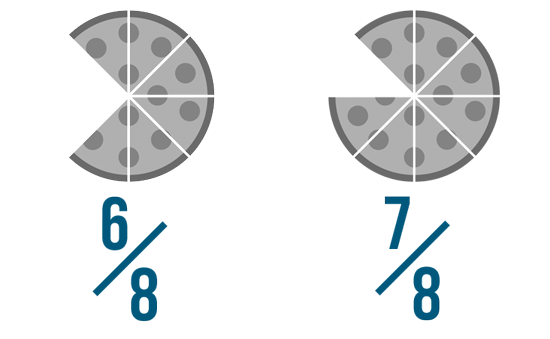
In this epitome, we can see that 7/8 is larger. The illustration makes it easy to compare these fractions. Merely how could we have done it without the pictures?
Click through the slideshow to larn how to compare fractions.
-
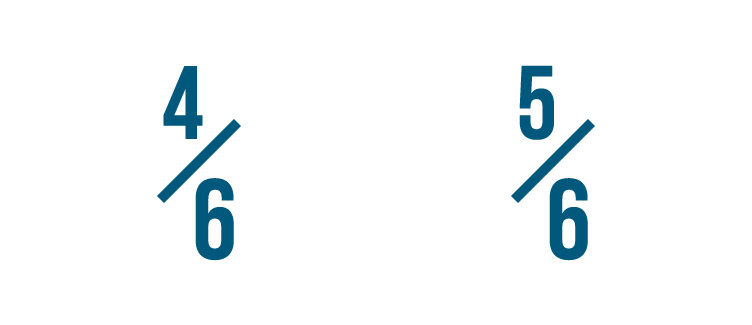
Before, we saw that fractions accept two parts.
-
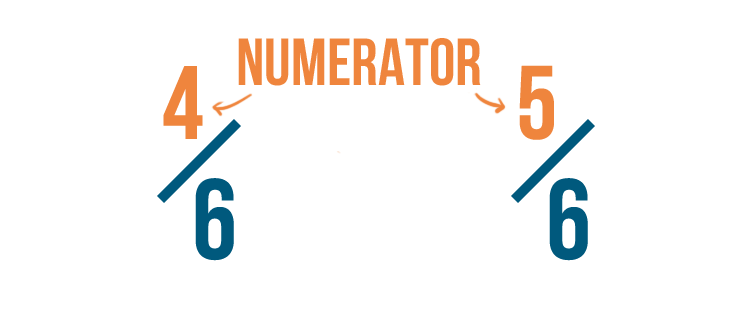
Ane part is the elevation number, or numerator .
-
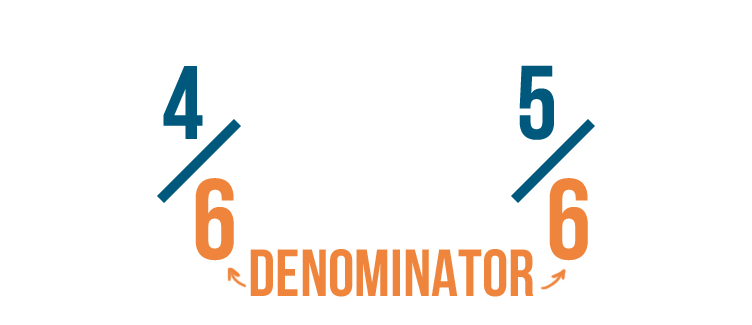
The other is the bottom number, or denominator .
-
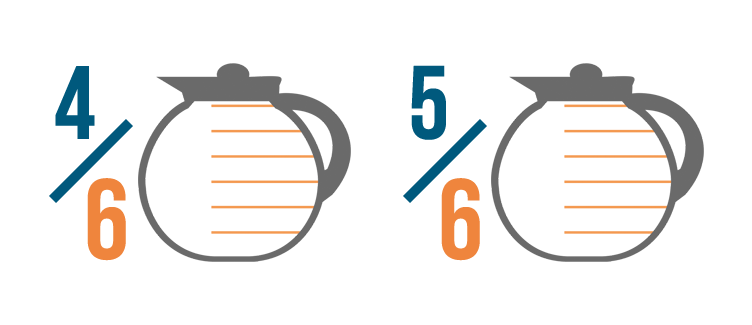
The denominator tells us how many parts are in a whole.
-
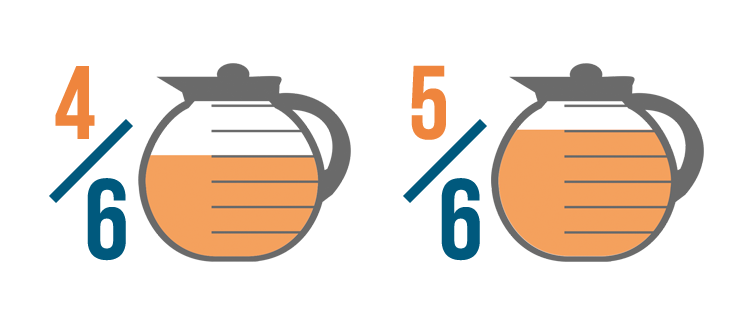
The numerator tells us how many of those parts nosotros accept.
-
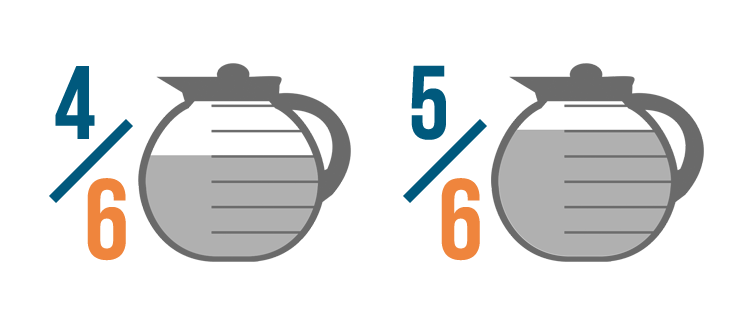
When fractions take the same denominator, it means they're split into the same number of parts.
-
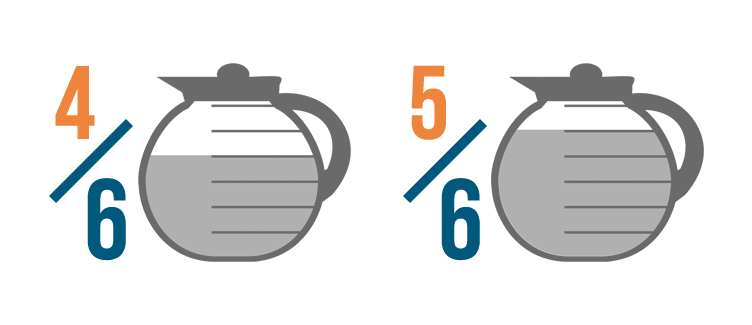
This means we tin compare these fractions just by looking at the numerator.
-
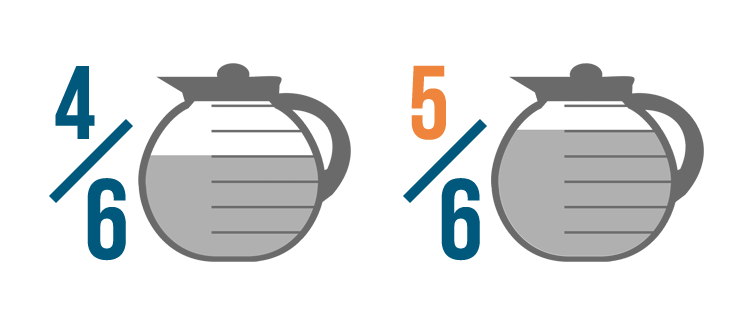
Here, 5 is more than four...
-
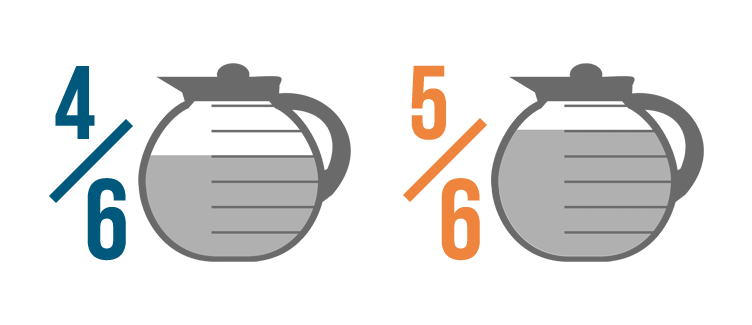
Here, five is more than iv...so we can tell that 5/6 is more than four/vi.
-
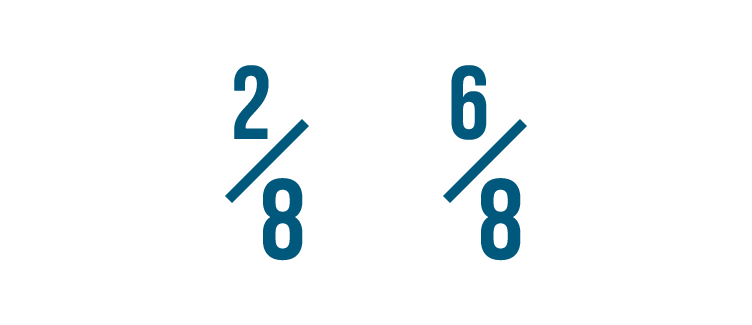
Let'southward look at another case. Which of these is larger: ii/eight or 6/8?
-
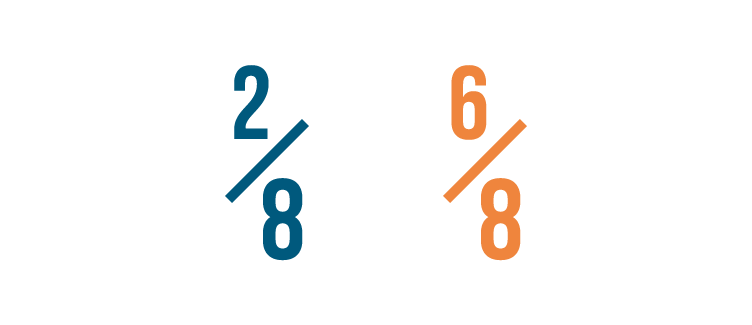
If yous idea 6/8 was larger, yous were correct!
-
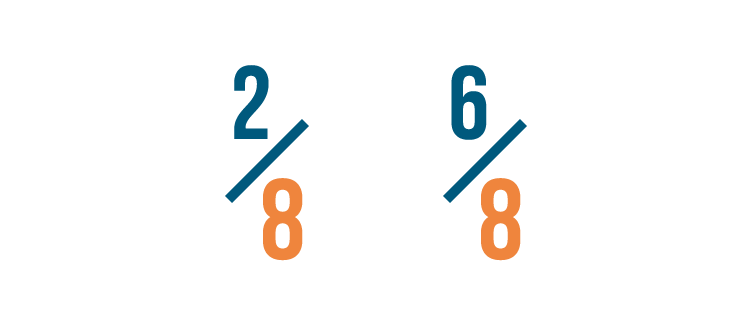
Both fractions have the same denominator.
-
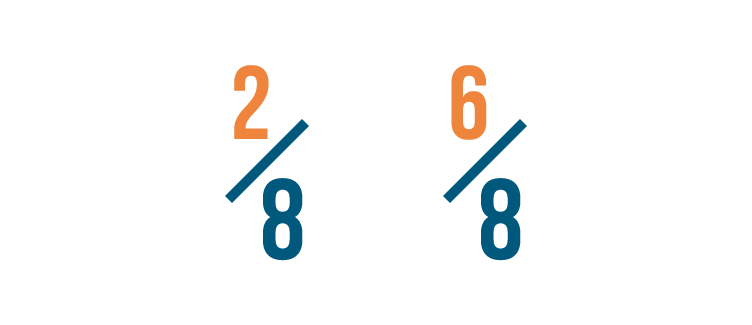
So we compared the numerators. six is larger than ii, so vi/8 is more ii/8.
-

Equally you saw, if two or more fractions have the same denominator, you can compare them by looking at their numerators. Every bit y'all tin see below, 3/4 is larger than 1/4. The larger the numerator, the larger the fraction.

Comparing fractions with dissimilar denominators
On the previous folio, we compared fractions that have the same lesser numbers, or denominators . But you know that fractions tin have any number as a denominator. What happens when you need to compare fractions with different lesser numbers?
For case, which of these is larger: 2/3 or ane/v? Information technology's difficult to tell just by looking at them. After all, 2 is larger than one, but the denominators aren't the same.
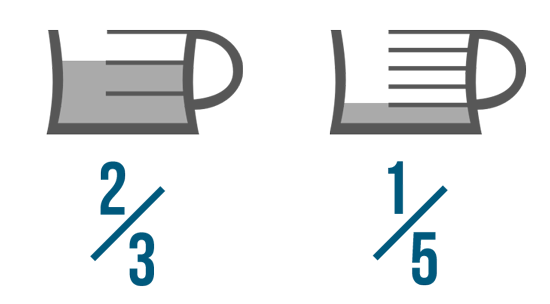
If y'all look at the picture, though, the divergence is clear: 2/3 is larger than i/5. With an illustration, it was easy to compare these fractions, but how could we accept done it without the pic?
Click through the slideshow to learn how to compare fractions with different denominators.
-

Let's compare these fractions: 5/8 and 4/6.
-
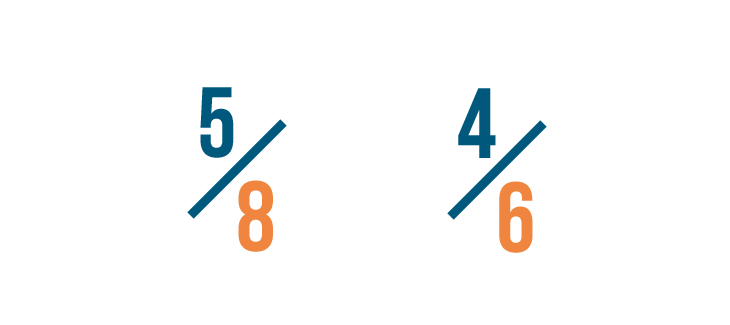
Before we compare them, we demand to change both fractions and so they have the same denominator, or bottom number.
-
First, nosotros'll find the smallest number that can be divided by both denominators. We phone call that the lowest common denominator.
-
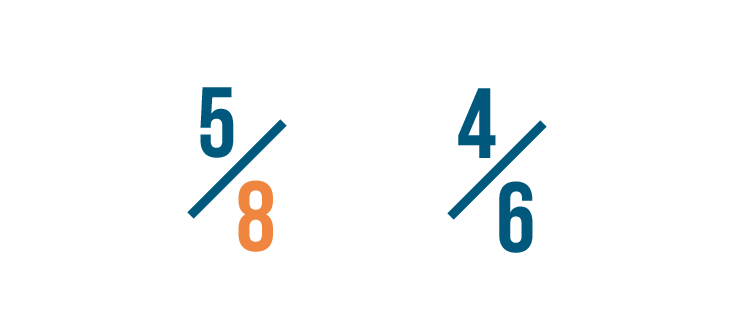
Our offset step is to find numbers that can be divided evenly by 8.
-
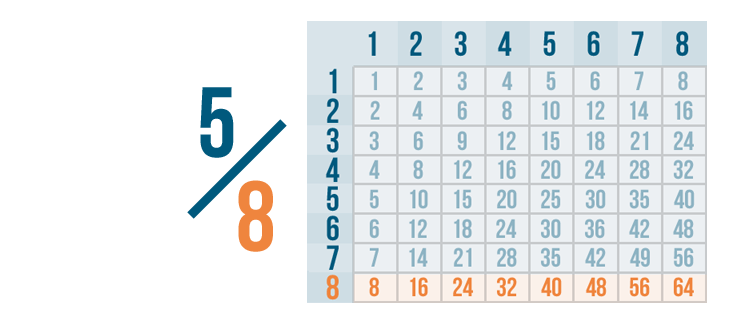
Using a multiplication table makes this like shooting fish in a barrel. All of the numbers on the 8 row can exist divided evenly by viii.
-
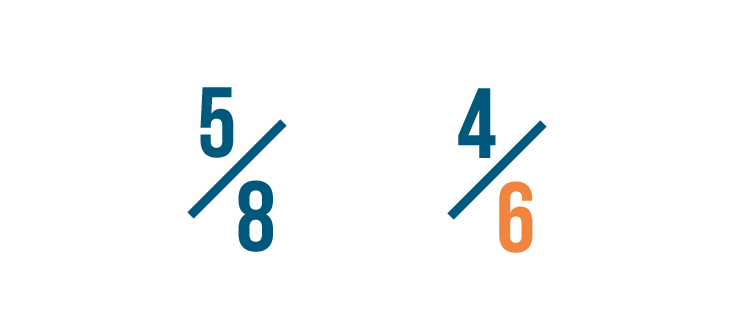
Now let's look at our second denominator: half-dozen.
-
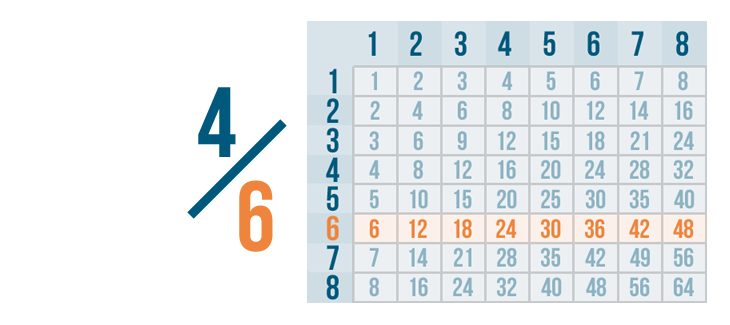
We can use the multiplication tabular array again. All of the numbers in the 6 row can exist divided evenly by vi.
-
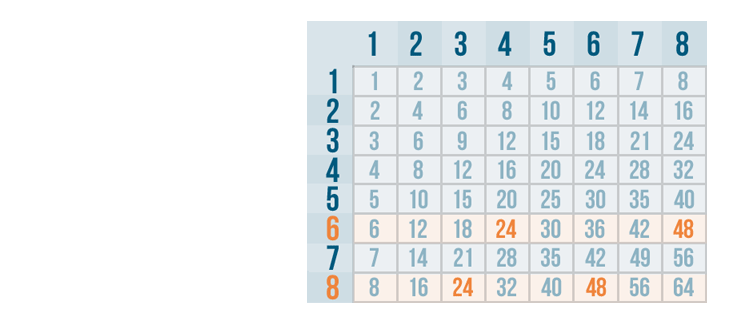
Let'due south compare the ii rows. It looks like there are a few numbers that can be divided evenly by both half-dozen and 8.
-
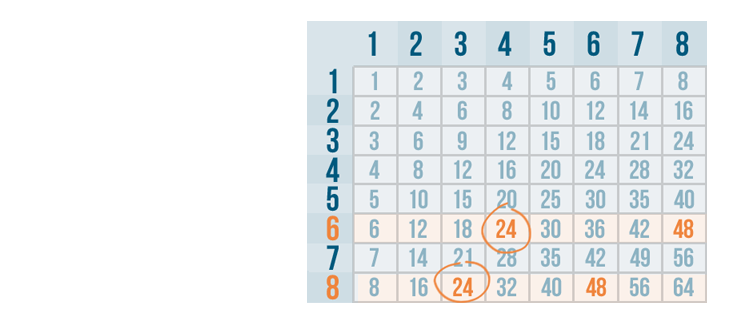
24 is the smallest number that appears on both rows, so it's the everyman common denominator.
-
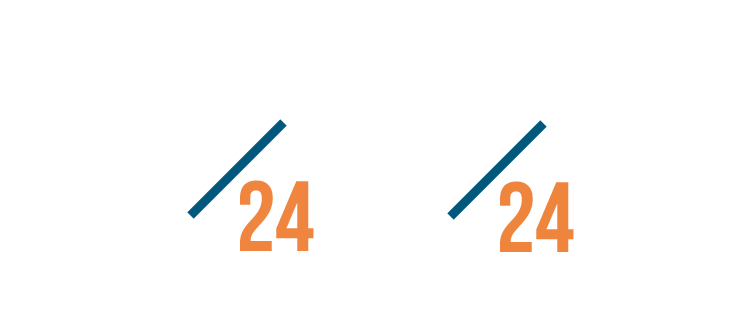
Now we're going to change our fractions and then they both have the same denominator: 24.
-
To do that, we'll have to change the numerators the same manner we inverse the denominators.
-
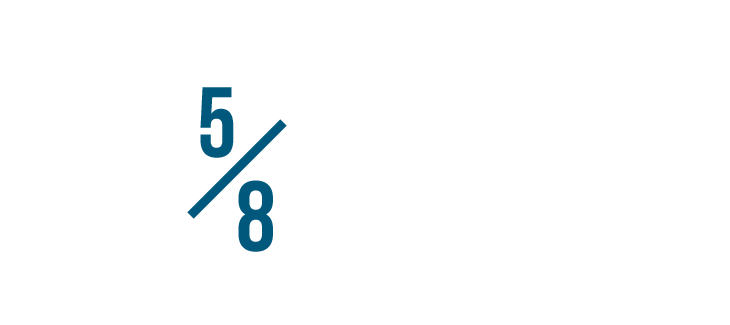
Let'due south expect at v/viii again. In order to change the denominator to 24...
-
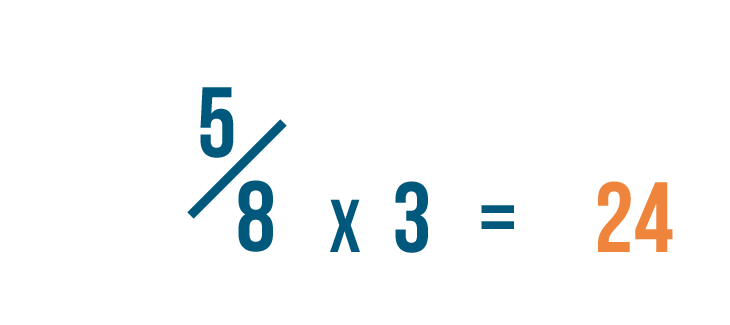
Let'due south look at 5/8 again. In order to change the denominator to 24...nosotros had to multiply viii by 3.
-
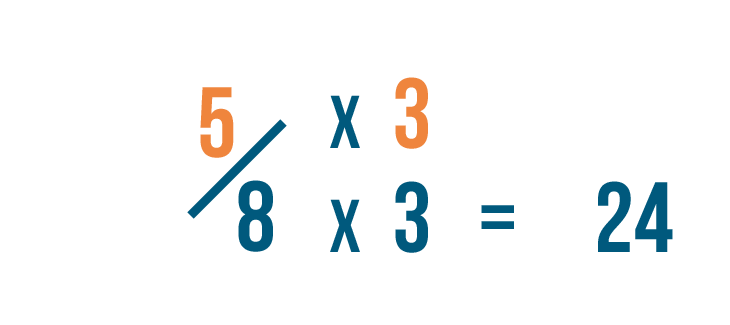
Since we multiplied the denominator by 3, we'll also multiply the numerator, or top number, past 3.
-
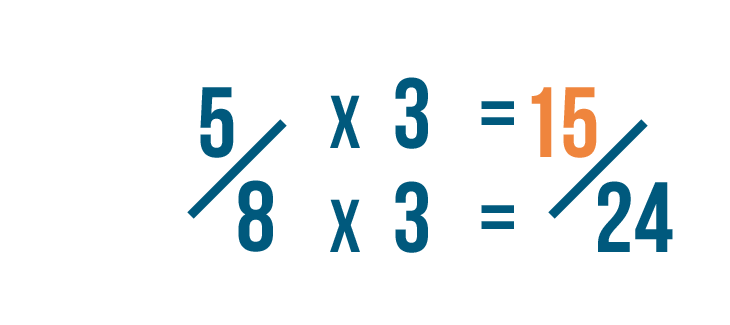
5 times 3 equals 15. So nosotros've changed v/eight into 15/24.
-
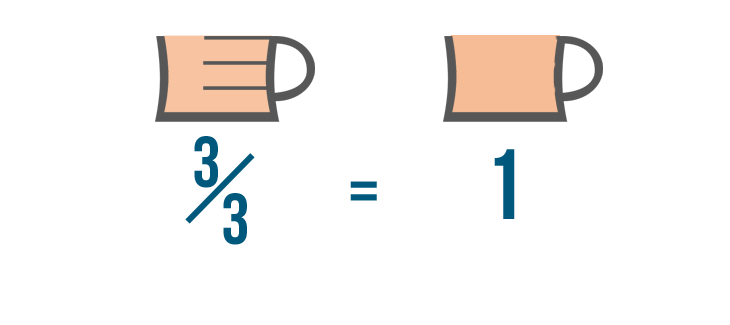
Nosotros can do that because whatsoever number over itself is equal to ane.
-
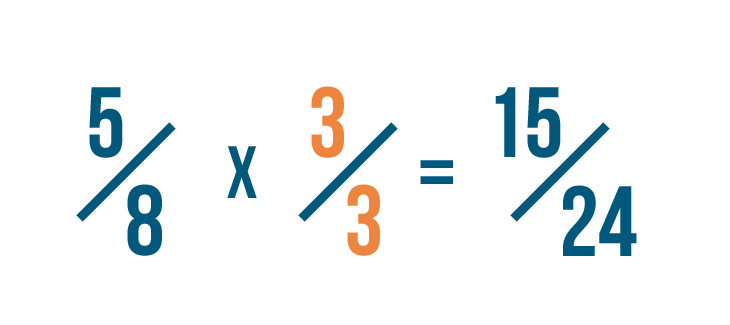
And so when we multiply 5/8 by 3/iii...
-
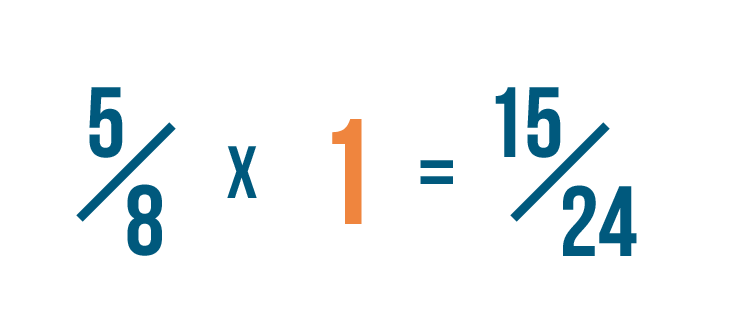
So when we multiply 5/eight by 3/3...nosotros're really multiplying v/8 by ane.
-
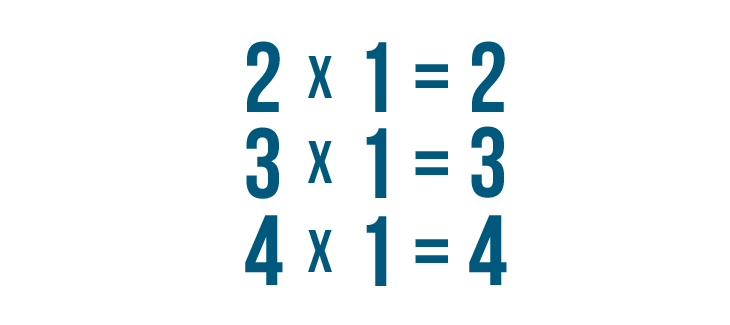
Since any number times i is equal to itself...
-
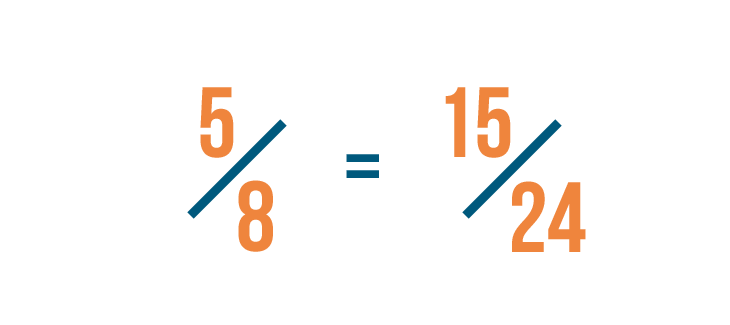
Since any number times one is equal to itself...nosotros tin say that 5/8 is equal to 15/24.
-
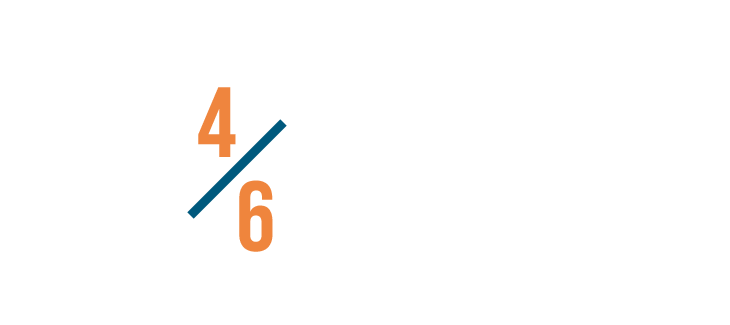
Now we'll do the same to our other fraction: 4/6. We also changed its denominator to 24.
-
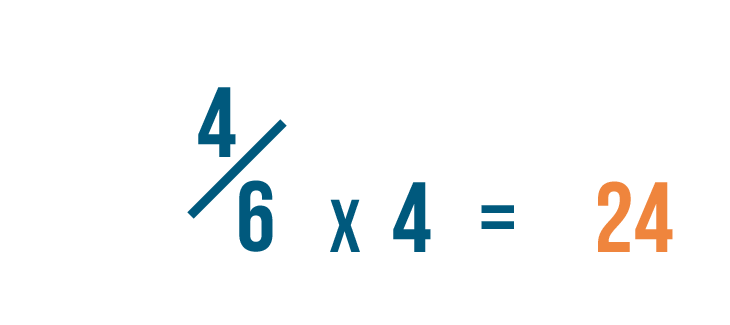
Our former denominator was 6. To get 24, nosotros multiplied half-dozen by 4.
-
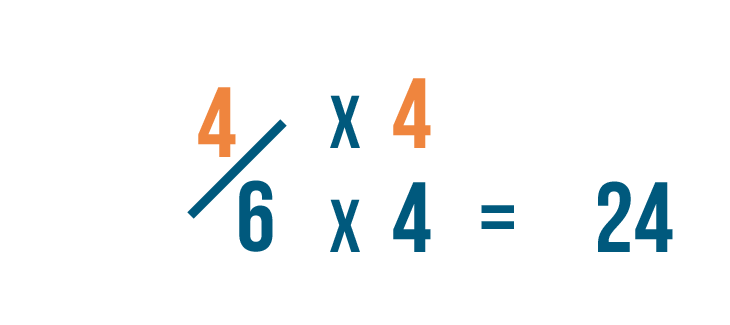
So nosotros'll likewise multiply the numerator by 4.
-
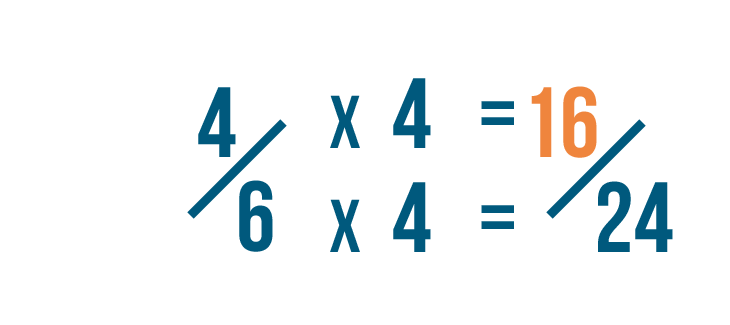
4 times 4 is xvi. So 4/6 is equal to xvi/24.
-
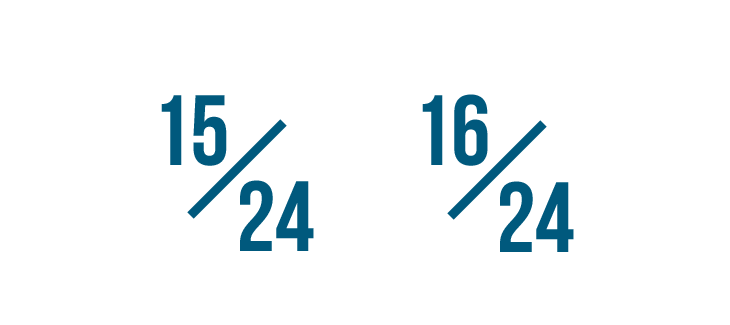
Now that the denominators are the aforementioned, we tin compare the two fractions by looking at their numerators.
-
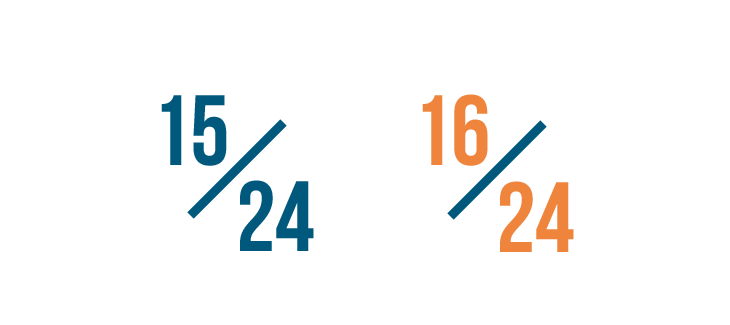
xvi/24 is larger than fifteen/24...
-
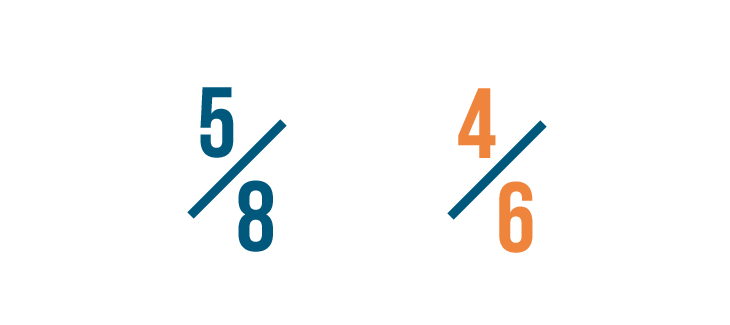
xvi/24 is larger than 15/24... and then iv/6 is larger than five/8.
-
Reducing fractions
Which of these is larger: four/8 or 1/2?
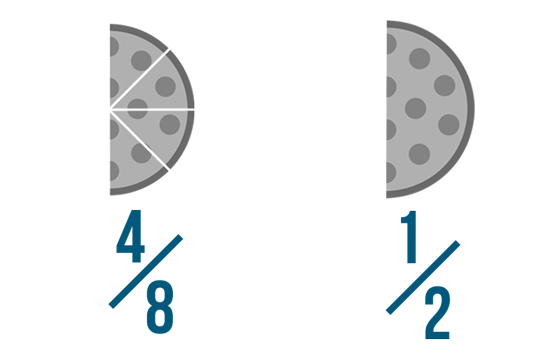
If you lot did the math or even simply looked at the picture show, y'all might have been able to tell that they're equal . In other words, 4/eight and 1/ii hateful the same thing, even though they're written differently.
If iv/8 means the same thing as 1/ii, why not just call it that? Half is easier to say than iv-eighths, and for nigh people it's also easier to empathise. After all, when you consume out with a friend, you dissever the pecker in half, non in eighths.
If you write 4/8 equally one/ii, you're reducing it. When nosotros reduce a fraction, we're writing it in a simpler form. Reduced fractions are always equal to the original fraction.
Nosotros already reduced iv/8 to 1/ii. If you await at the examples below, you can meet that other numbers can be reduced to i/ii every bit well. These fractions are all equal.
v/ten = ane/two 11/22 = 1/2 36/72 = ane/2
These fractions have all been reduced to a simpler class besides.
4/12 = one/3 14/21 = 2/3 35/50 = seven/10
Click through the slideshow to learn how to reduce fractions by dividing.
-

Let'southward try reducing this fraction: 16/20.
-
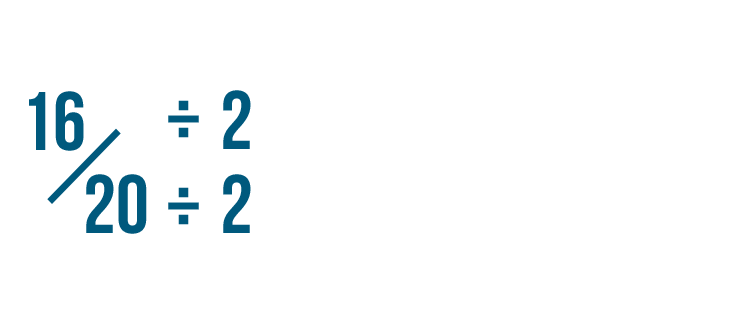
Since the numerator and denominator are fifty-fifty numbers, you lot can divide them by 2 to reduce the fraction.
-
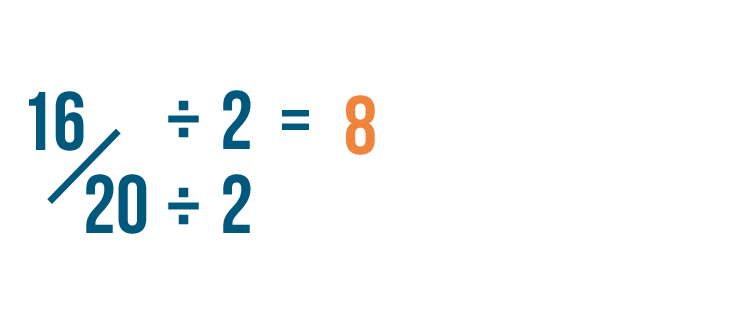
First, we'll divide the numerator past 2. 16 divided by 2 is 8.
-
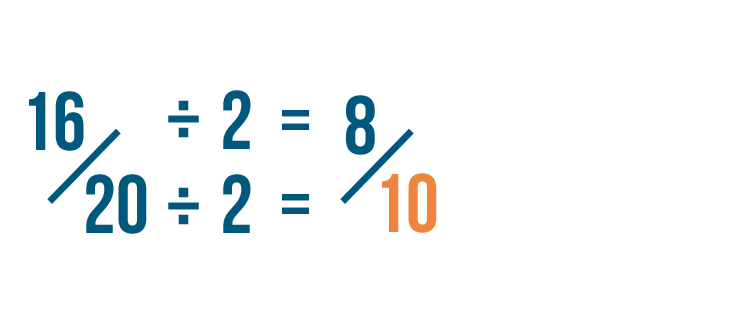
Next, we'll divide the denominator by 2. 20 divided past 2 is 10.
-
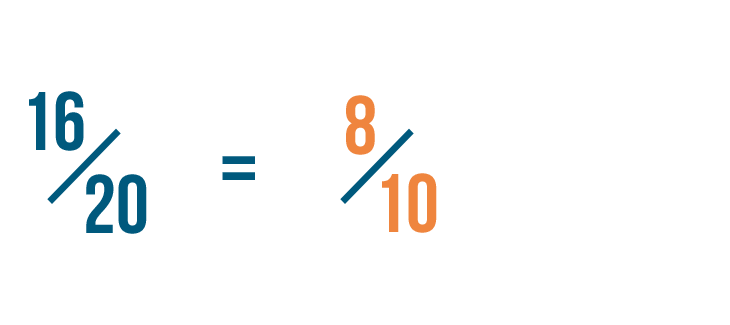
We've reduced 16/xx to 8/10. We could also say that 16/20 is equal to 8/10.
-
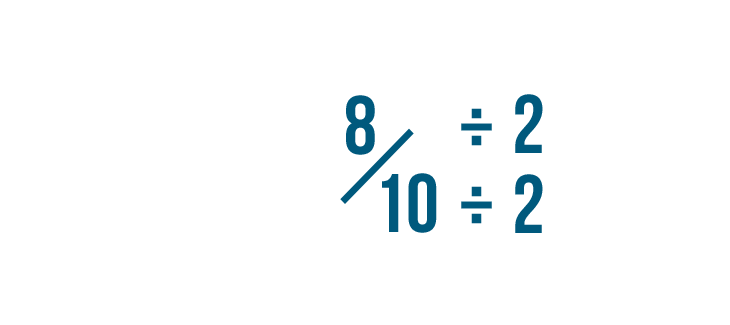
If the numerator and denominator can still be divided by ii, we can continue reducing the fraction.
-
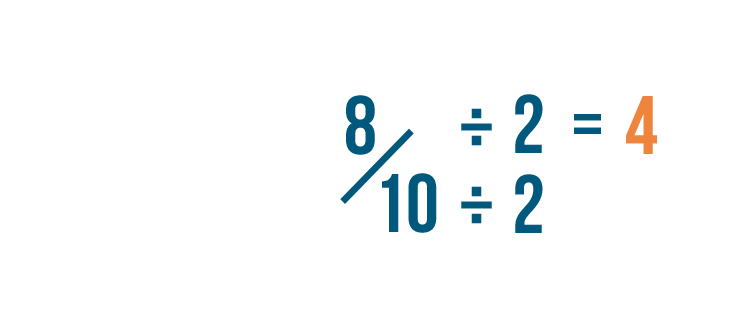
8 divided by 2 is 4.
-
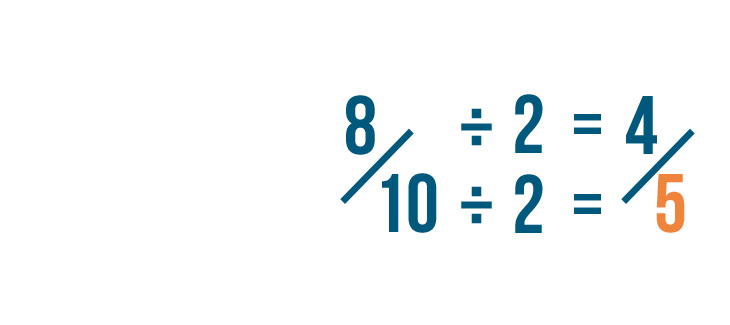
10 divided by two is 5.
-

Since there'southward no number that 4 and five tin can be divided by, we tin't reduce four/five any further.
-
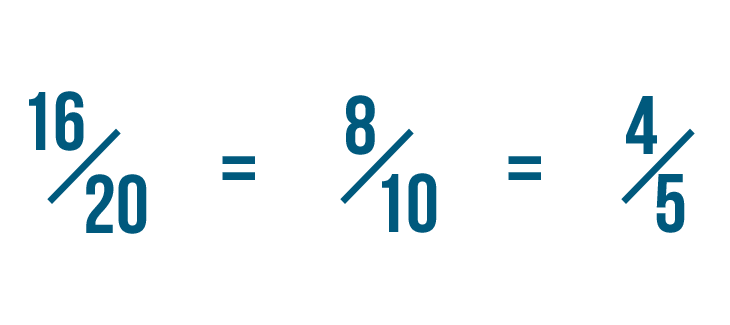
This ways four/5 is the simplest form of xvi/20.
-

Allow's try reducing another fraction: 6/9.
-

While the numerator is even, the denominator is an odd number, so we can't reduce by dividing past 2.
-
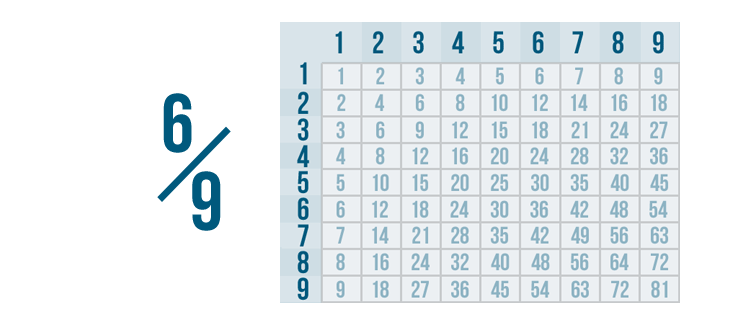
Instead, we'll need to find a number that 6 and 9 tin exist divided by. A multiplication table volition brand that number piece of cake to find.
-
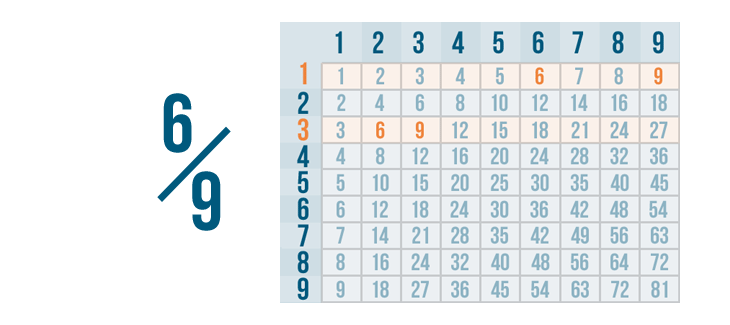
Let's discover vi and 9 on the same row. As you can see, half dozen and 9 tin both be divided past 1 and three.
-
Dividing by ane won't alter these fractions, then nosotros'll use the largest number that 6 and 9 can exist divided past.
-
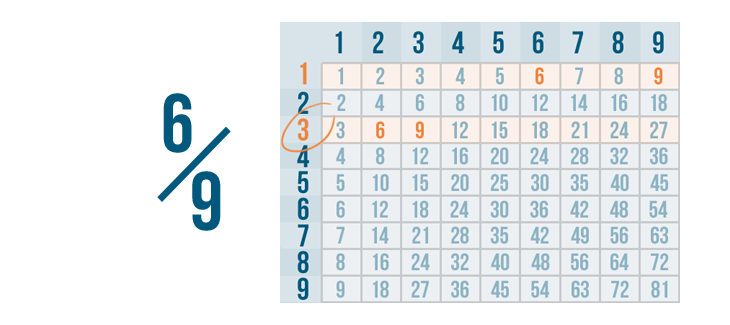
That'due south 3. This is called the greatest common divisor, or GCD. (You can too telephone call information technology the greatest mutual factor, or GCF.)
-
three is the GCD of 6 and ix because it's the largest number they can exist divided past.
-
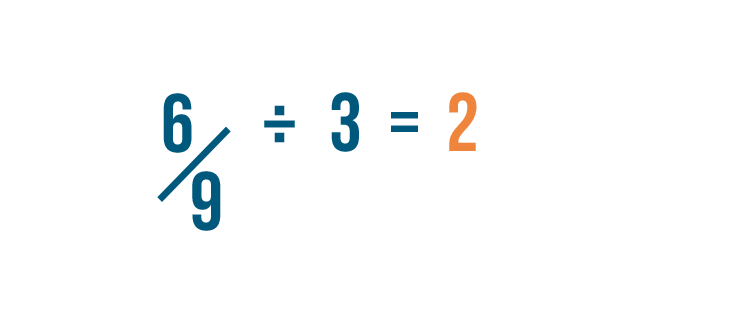
So we'll divide the numerator by iii. 6 divided by 3 is two.
-
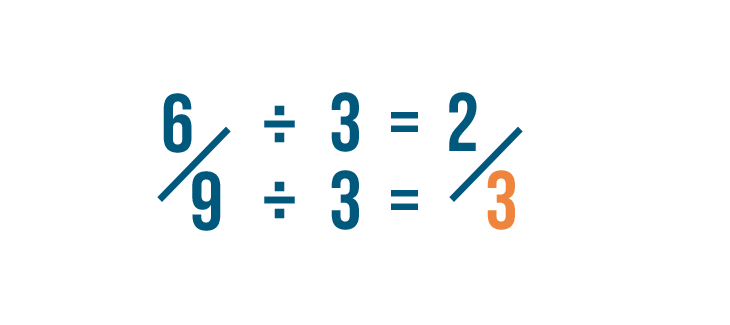
And then we'll separate the denominator by 3. nine divided past 3 is 3.
-
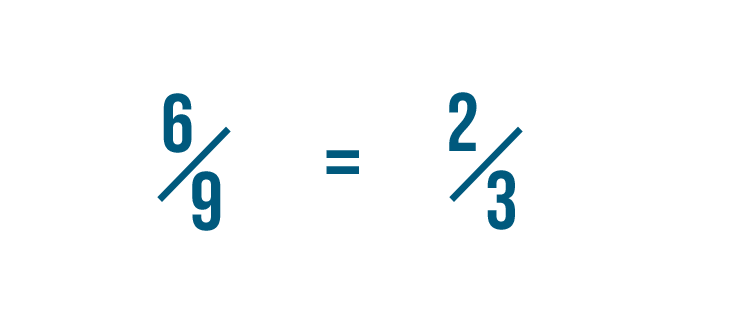
Now we've reduced six/9 to 2/3, which is its simplest form. We could also say that half-dozen/9 is equal to 2/three.
-
Irreducible fractions
Not all fractions tin be reduced. Some are already equally simple as they tin be. For example, you can't reduce ane/2 because there'due south no number other than i that both ane and 2 can be divided by. (For that reason, you tin can't reduce any fraction that has a numerator of ane.)
Some fractions that have larger numbers tin't exist reduced either. For instance, 17/36 can't be reduced because in that location's no number that both 17 and 36 can be divided past. If you tin't find whatsoever common multiples for the numbers in a fraction, chances are it'southward irreducible .
Endeavor This!
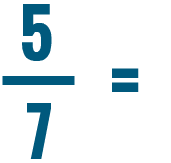
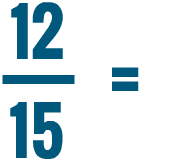
Reduce each fraction to its simplest form.
Mixed numbers and improper fractions
In the previous lesson, you learned about mixed numbers. A mixed number has both a fraction and a whole number. An example is 1 ii/iii. You lot'd read 1 ii/3 like this: one and two-thirds.
Another way to write this would be five/3, or v-thirds. These 2 numbers look dissimilar, but they're really the aforementioned. 5/3 is an improper fraction. This just means the numerator is larger than the denominator.
At that place are times when you may prefer to apply an improper fraction instead of a mixed number. Information technology'south piece of cake to alter a mixed number into an improper fraction. Let's larn how:
-
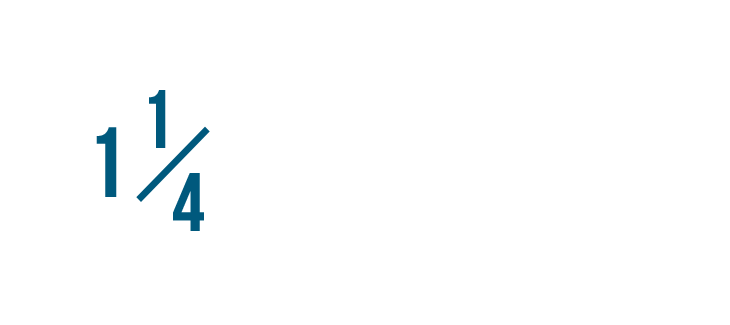
Let'southward convert 1 i/4 into an improper fraction.
-
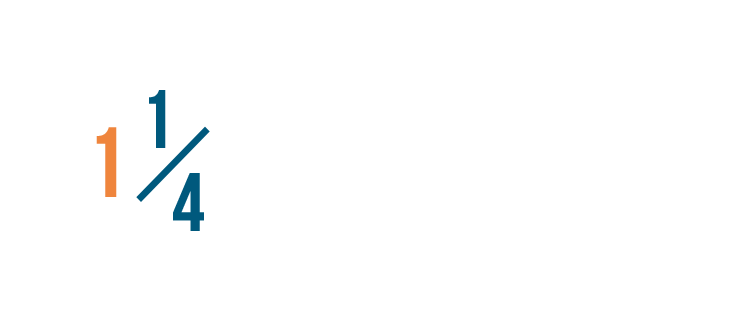
First, we'll need to find out how many parts make up the whole number: one in this example.
-
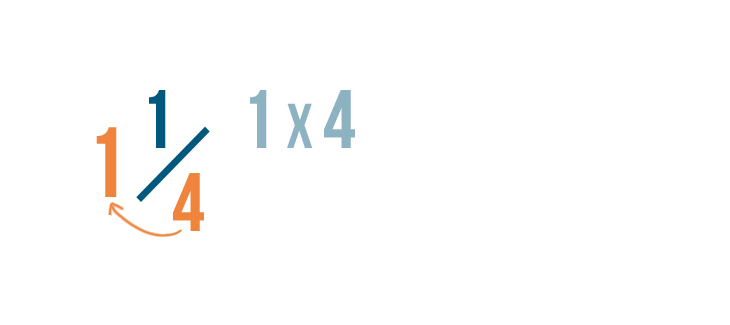
To do this, we'll multiply the whole number, i, by the denominator, 4.
-

1 times 4 equals four.
-
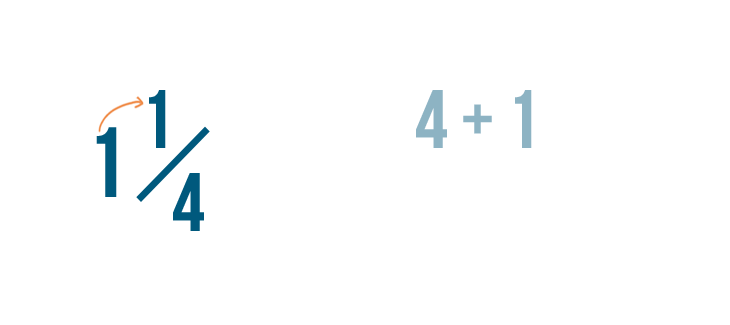
Now, let's add that number, 4, to the numerator, 1.
-
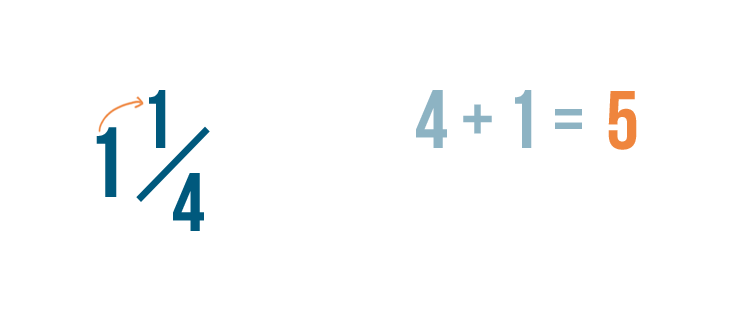
4 plus 1 equals five.
-

The denominator stays the same.
-
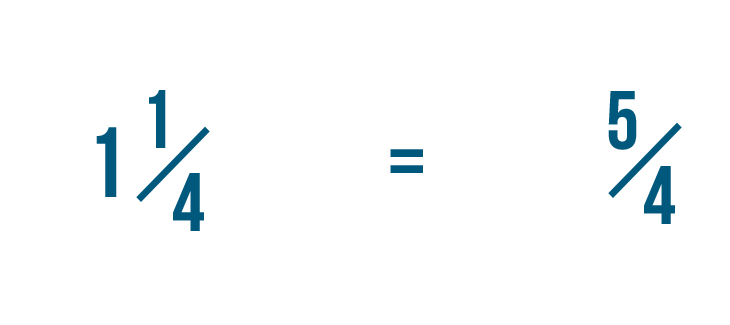
Our improper fraction is 5/4, or five-fourths. So nosotros could say that i 1/4 is equal to five/four.
-
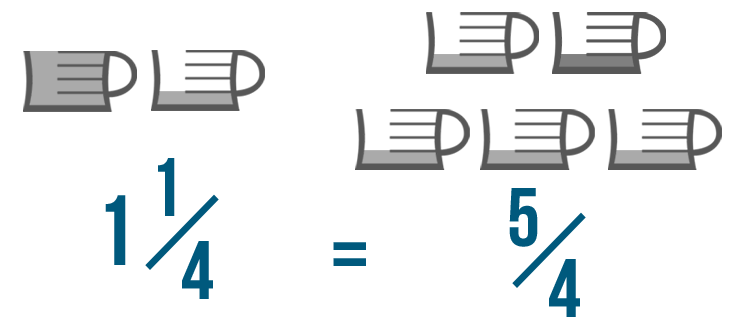
This means there are five one/4s in 1 one/four.
-
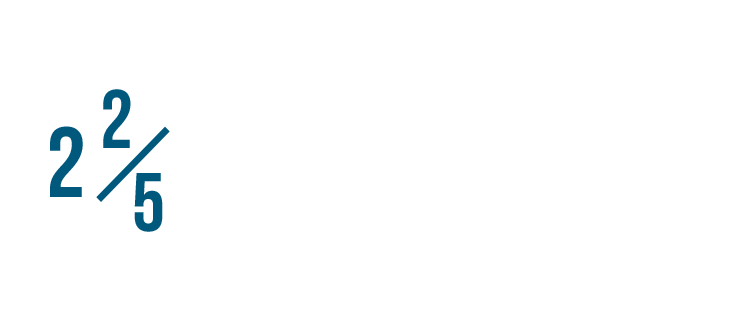
Let'southward convert another mixed number: 2 2/5.
-
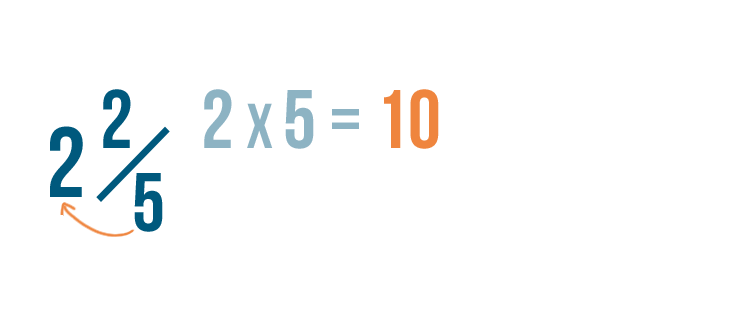
First, we'll multiply the whole number past the denominator. 2 times v equals 10.
-
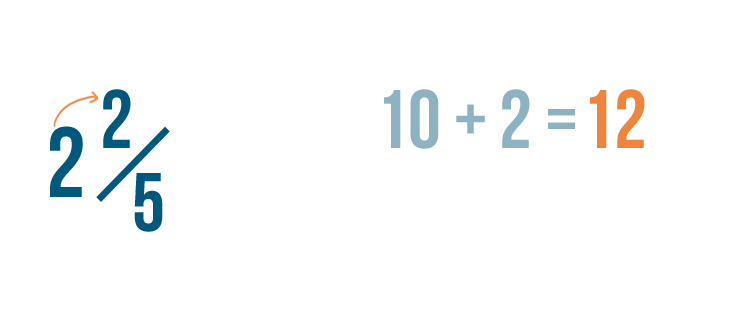
Adjacent, we'll add 10 to the numerator. 10 plus ii equals 12.
-
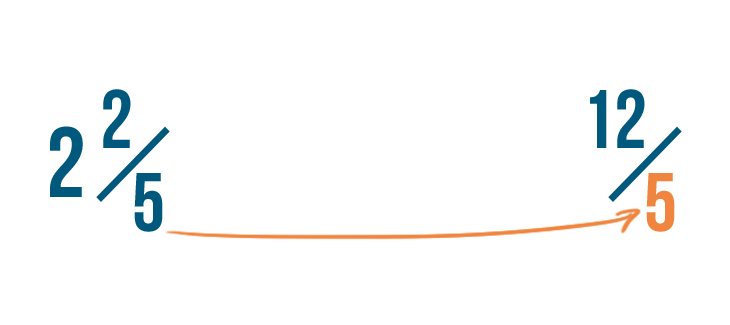
As always, the denominator will stay the same.
-
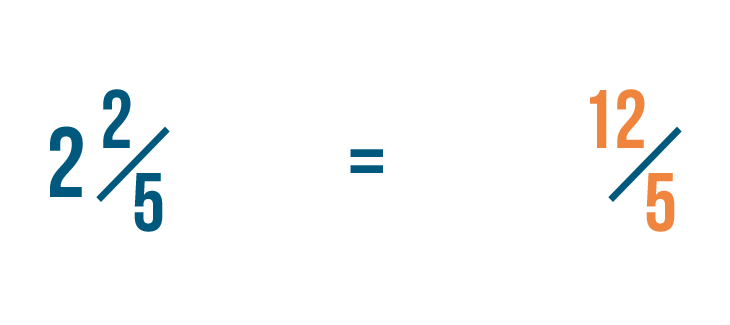
So two two/5 is equal to 12/5.
-
Effort This!
Endeavor converting these mixed numbers into improper fractions.
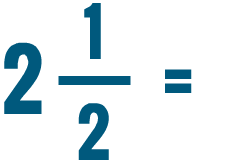
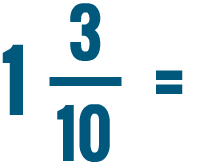
Converting improper fractions into mixed numbers
Improper fractions are useful for math issues that use fractions, equally yous'll learn later. However, they're also more difficult to read and understand than mixed numbers. For example, it's a lot easier to picture 2 iv/7 in your head than 18/7.
Click through the slideshow to learn how to modify an improper fraction into a mixed number.
-

Let's plough 10/4 into a mixed number.
-

Y'all tin can think of any fraction as a division trouble. But treat the line between the numbers like a division sign (/).
-

Then nosotros'll divide the numerator, x, past the denominator, 4.
-
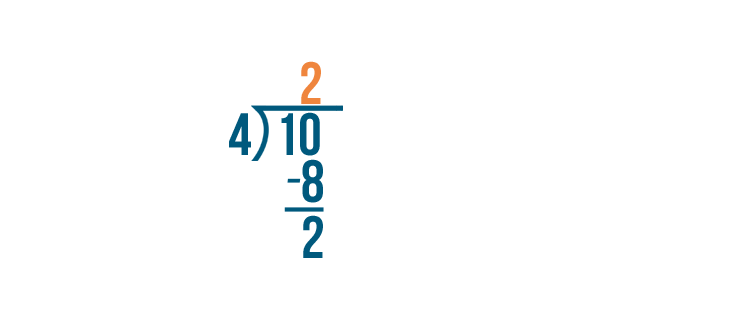
x divided past four equals two...
-
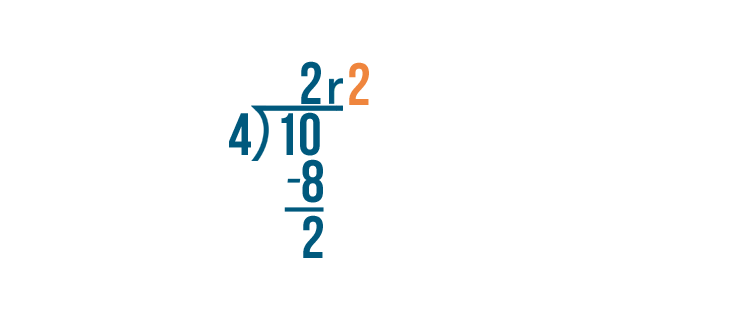
ten divided by 4 equals ii... with a remainder of 2.
-
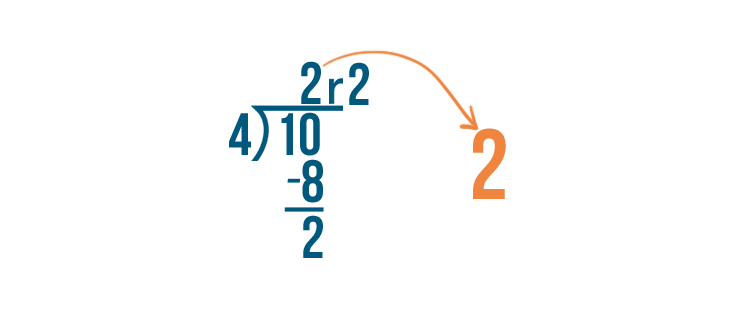
The respond, 2, will become our whole number considering 10 can be divided by iv twice.
-
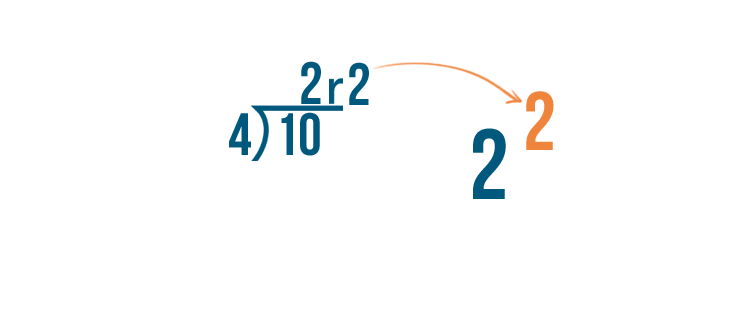
And the remainder, 2, volition become the numerator of the fraction because we accept 2 parts left over.
-
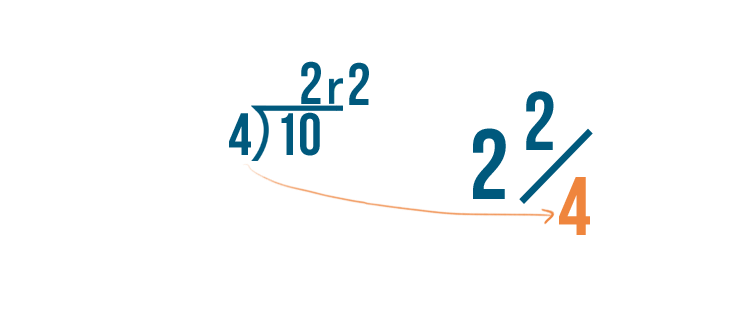
The denominator remains the same.
-
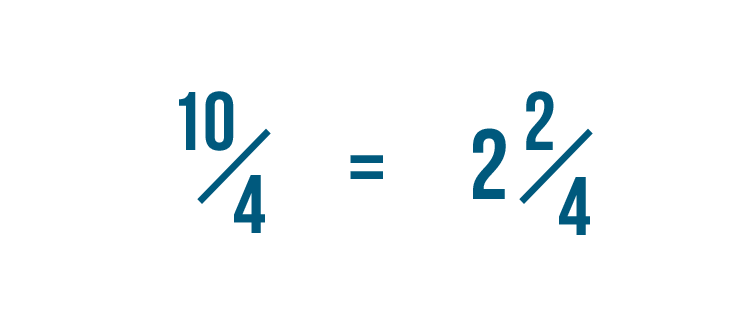
And then 10/4 equals two ii/4.
-

Let'south try another case: 33/iii.
-
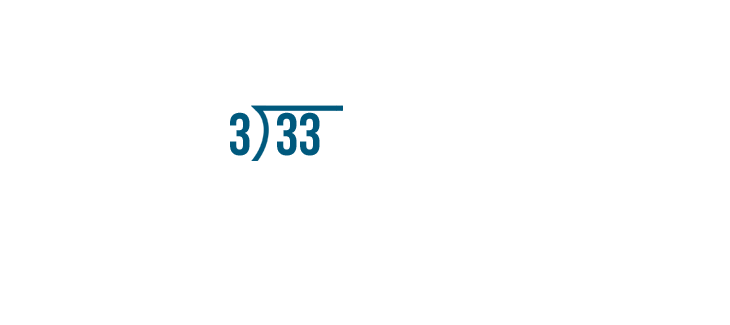
We'll divide the numerator, 33, by the denominator, iii.
-
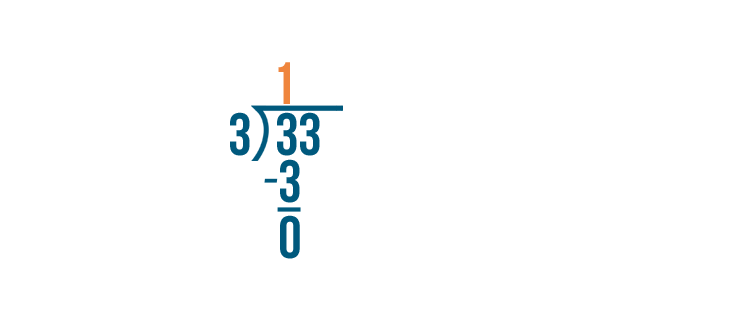
33 divided by 3...
-
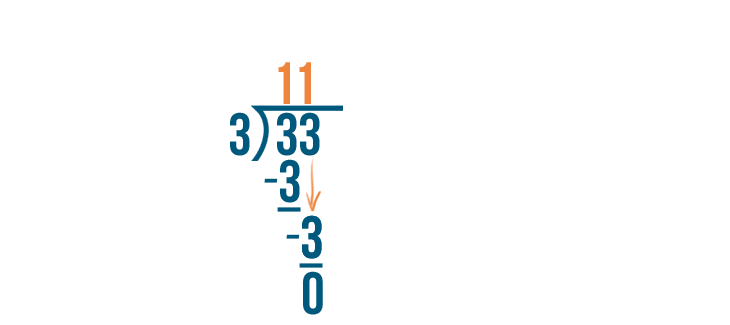
33 divided past iii... equals xi, with no rest.
-
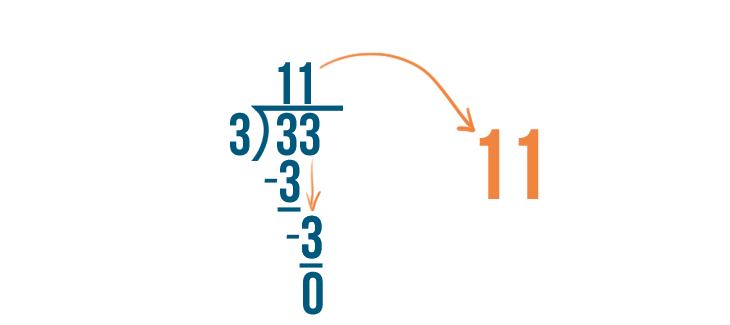
The respond, 11, will become our whole number.
-
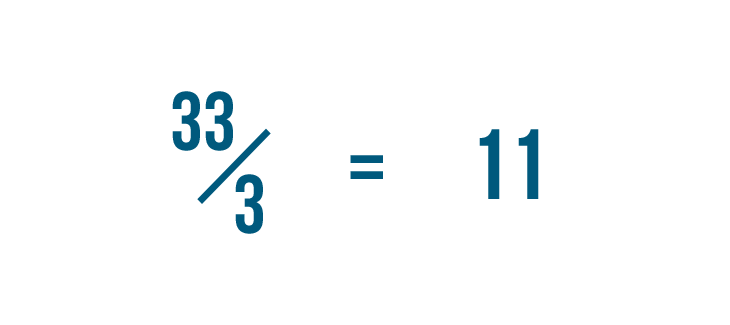
At that place is no remainder, so nosotros tin can come across that our improper fraction was actually a whole number. 33/3 equals 11.
-
Try This!
Try converting these improper fractions into mixed numbers.


/en/fractions/adding-and-subtracting-fractions/content/

Is 1/4 Bigger Than 1/8,
Source: https://edu.gcfglobal.org/en/fractions/comparing-and-reducing-fractions/1/
Posted by: bergerselmerry.blogspot.com
0 Response to "Is 1/4 Bigger Than 1/8"
Post a Comment